
Supply chain resilience: European suppliers for stability
In 2025, global supply chains will face major challenges from geopolitical tensions, material shortages and unexpected disruptions to complex manufacturing networks. Meanwhile, European suppliers will benefit from their proximity to markets, which will enable faster delivery, better communication and more flexible production.
5 approaches to support supply chain resilience and supply security
1.
European suppliers provide stability by offering short delivery routes and flexible capacity
2.
Identifying weaknesses through risk indicators and supplier assessment
3.
Diversifying the supplier portfolio via digital procurement platforms
4.
AI-driven forecasting and real-time risk monitoring
5.
Partnership-based supplier communication to facilitate long-term cooperation
Significance of supply chain resilience for technical components
A resilient supply chain is essential for procuring off-drawing and technical components. Reliable and flexible supply chains help to prevent production delays and maintain consistent quality for high-precision parts.
European suppliers benefit from their proximity, which enables them to respond more quickly. Digital procurement platforms connect buyers with local manufacturers, thereby improving transparency and efficiency.
Systematic identification of weaknesses in the supply chain.
1.
Dependence on individual suppliers (single-source situations)
2.
Lack of transparency in multi-stage supply chains
3.
Insufficient production capacity during peak demand periods
4.
Suppliers geographically concentrated in unstable regions
5.
Inadequate communication channels with strategic suppliers
Identifying risk indicators
Enhancing supply chain resilience involves systematically identifying vulnerabilities. Key risk indicators include:
Streamlining supplier evaluation
Effective supplier evaluation relies on structured methods. Regular audits and thorough risk analyses help identify potential weaknesses at an early stage. Consideration should be given to both financial key figures and operational performance indicators. Evaluation criteria should include delivery reliability, quality standards, response times and financial stability. Progressive companies use real-time monitoring systems that continuously collect data and automatically highlight any irregularities.
The German Association for Materials Management, Purchasing and Logistics (BME) recommends a structured approach to categorising risks based on their probability of occurrence and potential impact. This should be updated regularly, as risk profiles evolve rapidly in a dynamic market environment.
Supplier portfolio diversification
Digital platforms for supplier searches
Digital procurement platforms help buyers to systematically diversify their supplier portfolio. Intelligent filter functions enable targeted searches for suppliers with specific manufacturing competencies, certifications or regional locations.
Modern platforms significantly accelerate the selection process and enhance the quality of supplier selection. This allows purchasers to swiftly identify and evaluate alternative sources of supply, which is crucial in times of crisis.
Benefits of regional procurement
Regional procurement in Europe reduces dependence on global supply chains and improves responsiveness to disruptions. European suppliers offer significant advantages:
1.
Shorter transport routes and lower logistics costs
2.
Reduced customs risks and regulatory issues
3.
More effective planning due to being in the same time zone
4.
Simplified communication enabled by linguistic and cultural similarities
5.
Greater flexibility to accommodate short-term changes
Strategic diversification considers not only the number of suppliers, but also how they are distributed according to geographical, technological and economic criteria. This creates a resilient network capable of responding flexibly to various potential disruption situations.
Inventory optimisation for security of supply
Strategically building up safety stock
Inventory optimisation is a key aspect of ensuring supply chain resilience. Safety stock should be built up for critical components with long procurement times. Segmentation according to ABC/XYZ analyses enables a differentiated inventory strategy.
High-value, critical A-parts require different strategies to lower-value C-parts. Modern forecasting methods combine historical data with current market trends to predict demand more accurately.
Developing hybrid strategies
Just-in-time strategies should be complemented by just-in-case approaches. This does not mean abandoning lean supply chains altogether but rather adopting a hybrid strategy involving higher safety stocks for critical components.
Vendor-managed inventory concepts can transfer some responsibility for inventory management to reliable suppliers, reducing your own capital commitment. Modern supply chain management systems offer real-time insights into inventory levels throughout the entire supply chain.
Use of technology for risk monitoring
AI-supported forecasts and automation
Modern technologies are transforming the way risk is monitored in supply chains. AI-powered forecasts and automated supplier evaluations improve real-time monitoring and enable swift responses to market changes.
Advanced AI systems analyse vast amounts of data from various sources, including supplier metrics, weather data, geopolitical developments and market trends. Such systems recognise patterns that often remain invisible to humans while continuously improving through machine learning.
Creating digital transparency
Blockchain technology provides immutable records of all transactions, ensuring complete transparency throughout the entire supply chain. This improves traceability and reduces the risk of counterfeiting or quality issues. Internet of Things applications are transforming the way goods and materials are monitored in real time. Sensors continuously monitor critical parameters such as location, temperature and humidity, enabling immediate action to be taken in the event of any deviations.
Partnership-based supplier communication
Structured communication formats
Effective collaboration requires strong supplier communication. Key elements include regular meetings, clear expectations and a partnership-based approach. Quarterly reviews facilitate strategic discussions.
Transparent performance evaluation systems, such as supplier scorecards, are based on objective criteria and provide clear guidelines for improvement on both sides. Involving strategic suppliers early in product development processes generates valuable momentum for optimisation.
Digital collaboration tools
Digital platforms facilitate communication by fostering transparent and trustworthy relationships between buyers and suppliers. Central information portals enable specifications, quality requirements and schedules to be shared in real time.
Collaboration tools allow documents to be edited jointly and problems to be solved together across company boundaries. Even when there are limited travel options, digital communication channels make sure that there is continuous exchange in times of crisis.
Scenario planning for crisis prevention
Systematic preparation for disruptions
Scenario planning is essential for preparing for crises such as natural disasters, political instability and pandemics. Best practice shows that having contingency plans and a redundant supply chain are critical to maintaining business continuity.
Leading companies devise three to five different scenarios, ranging from optimistic to pessimistic assumptions. Holistic solutions are developed through collaboration between cross-functional teams from purchasing, logistics, production and sales.
Continuous improvement through simulations
Frequent simulation exercises and stress tests help to identify weaknesses in emergency plans and improve responsiveness. Gaming approaches test decision-making processes under pressure in real time.
Modern simulation software can model complex scenarios and visualise their impact on the entire supply chain. Real-time data integration maintains the continuous update of these models, ensuring they accurately reflect the current risk landscape.
Conclusion: Strategic steps toward supply chain resilience
In 2025, strengthening supply chain resilience will be crucial to business success. Thanks to their proximity and flexibility, European suppliers offer reliable alternatives to global supply chains. The systematic approach covers six core areas:
1.
Systematic identification of vulnerabilities using risk indicators
2.
Strategic diversification of the supplier portfolio
3.
Smart inventory optimisation with hybrid strategies
4.
Targeted use of modern technologies for risk monitoring
5.
Strengthening cooperative communication with suppliers
6.
Crisis prevention through forward-looking scenario planning
Strategic supply chain resilience is becoming a competitive advantage and a compliance requirement, particularly in the context of increasing regulatory requirements. Companies should seize this opportunity to make fundamental improvements to their procurement processes.
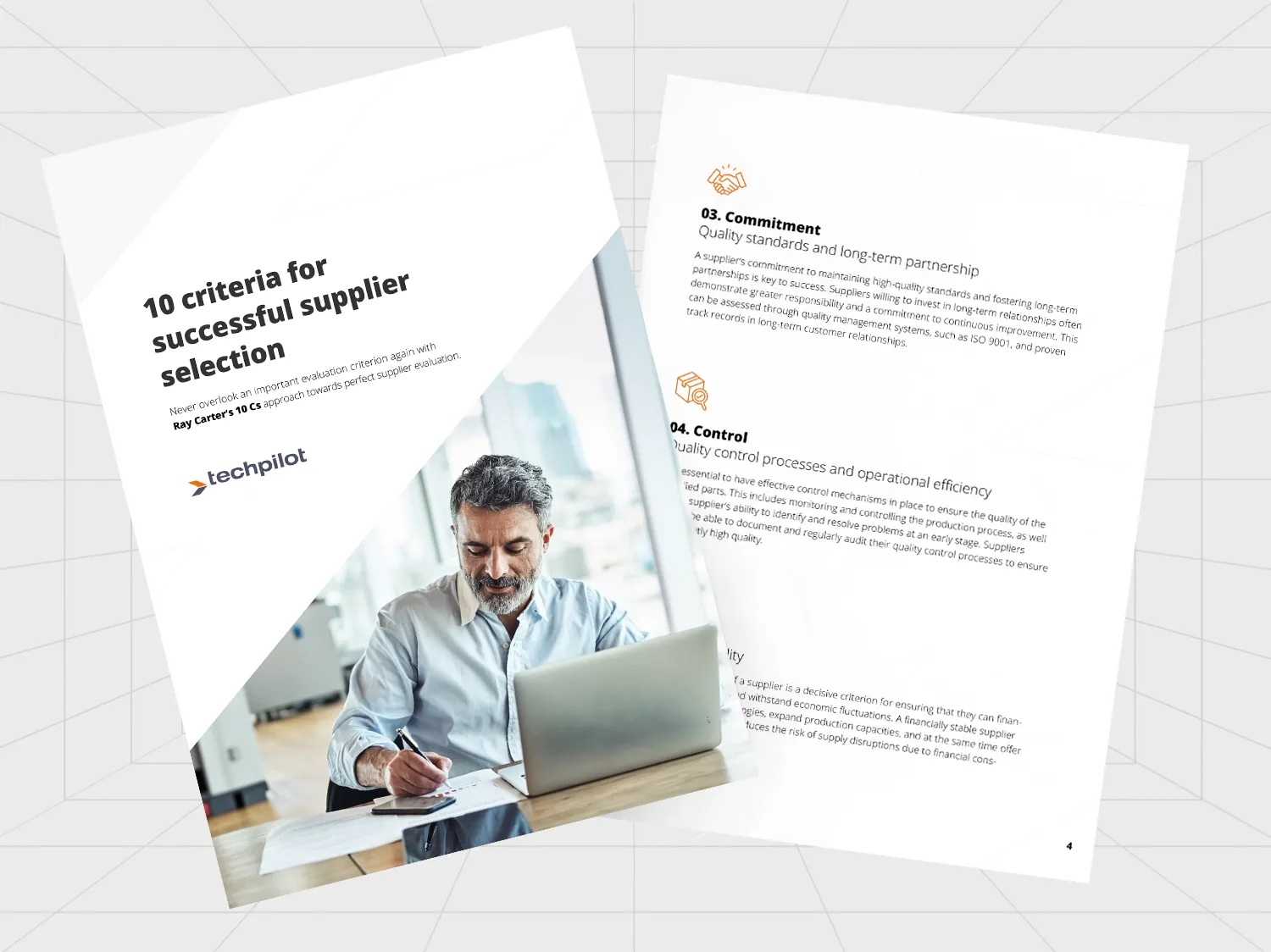
A comprehensive, 15-point checklist for the strategic procurement of off-drawing parts is available to help you systematically review your own purchasing strategy. This covers technical and strategic aspects, as well as due diligence and geopolitical requirements. > Download here>
FAQ: Frequently asked questions regarding supply chain resilience
What does supply chain resilience mean?
Supply chain resilience is a company's ability to anticipate supply chain disruptions, respond quickly to them and recover from them. This involves taking both reactive measures to limit damage and proactive strategies to minimise risk.
What are single-source situations?
A single-source situation arises when a company is wholly dependent on a single supplier for certain components or materials. This dependency poses a significant risk, as failures on the part of the supplier can result in direct production interruptions.
What benefits do European suppliers offer?
European suppliers offer shorter transport routes, lower customs risks, more efficient planning thanks to a shared time zone, simplified communication and greater flexibility in the event of last-minute changes. Additionally, uniform legal conditions apply within the EU.
What is Vendor-Managed-Inventory?
Vendor-managed inventory (VMI) is a concept in which the supplier is responsible for managing and planning inventory at the customer's premises. This reduces the customer's capital commitment while improving supply security by leveraging the supplier's expertise.
How does ABC/XYZ analysis work?
The ABC/XYZ analysis method categorises materials and components. ABC classification is based on value share (A = high, B = medium, C = low), while XYZ classification is based on consumption regularity (X = constant, Y = fluctuating, Z = irregular). This combination enables differentiated procurement strategies.
What are Quarterly Business Reviews?
Quarterly Business Reviews (QBR) are structured quarterly meetings between buyers and strategic suppliers. They evaluate performance, discuss potential improvements and plan future activities. QBRs strengthen partnership-based cooperation and improve communication.