




The challenges of cost control in CNC purchasing
Fluctuating markets & material prices: Volatile conditions make it difficult to achieve lasting cost advantages.
Fragmented procurement: Many suppliers and smaller orders increase costs and prevent economies of scale.
Lack of transparency and data: Without digital tools, process costs and demand forecasts remain unclear.
Focus on individual prices: Those who only consider the price per part overlook hidden costs throughout the entire procurement cycle.
How the guide helps with cost control:
Our guide shows you how to tackle these problems with a balanced mix of measures. You will learn what is important in strategic contract negotiations, how to optimize your supplier structure, and why modern procurement technology is a decisive lever for efficiency. You will also learn why a holistic view of all cost factors and the targeted use of data make your company more resilient. The specific measures are explained step by step in the guide and can be applied directly in your everyday procurement activities.
Reduce costs and optimize terms: Learn how to strategically improve contracts and supplier relationships.
Efficiency through modern tools: Learn how automation and digital procurement solutions reduce routine tasks.
Holistic cost perspective: Look beyond the unit price and consider all relevant cost factors.
Resilience with data & partnerships: Use reliable data and long-term relationships to make your supply chains more crisis-proof.
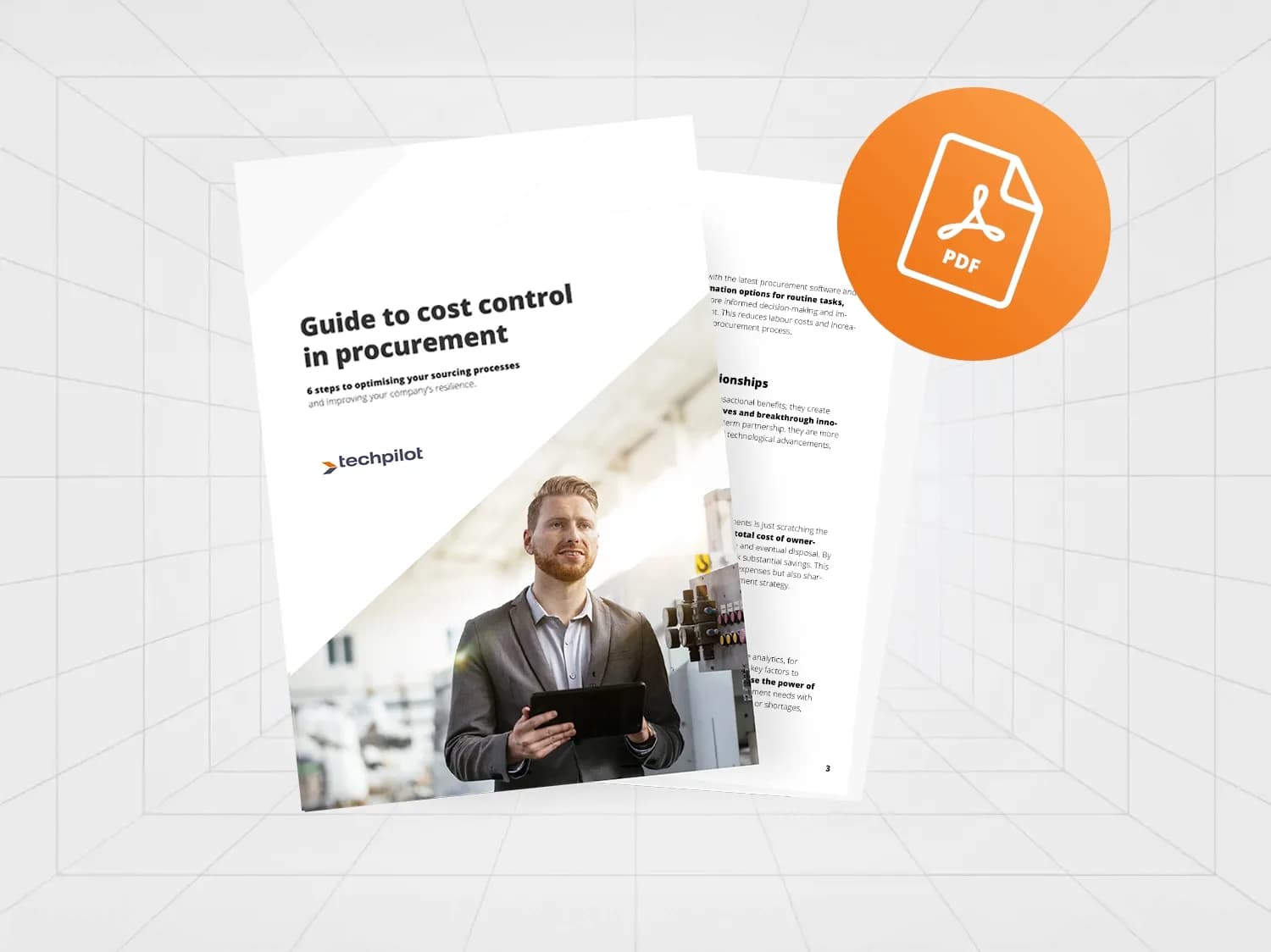
How the guide helps with cost control:
Our guide shows you how to tackle these problems with a balanced mix of measures. You will learn what is important in strategic contract negotiations, how to optimize your supplier structure, and why modern procurement technology is a decisive lever for efficiency. You will also learn why a holistic view of all cost factors and the targeted use of data make your company more resilient. The specific measures are explained step by step in the guide and can be applied directly in your everyday procurement activities.
Reduce costs and optimize terms: Learn how to strategically improve contracts and supplier relationships.
Efficiency through modern tools: Learn how automation and digital procurement solutions reduce routine tasks.
Holistic cost perspective: Look beyond the unit price and consider all relevant cost factors.
Resilience with data & partnerships: Use reliable data and long-term relationships to make your supply chains more crisis-proof.